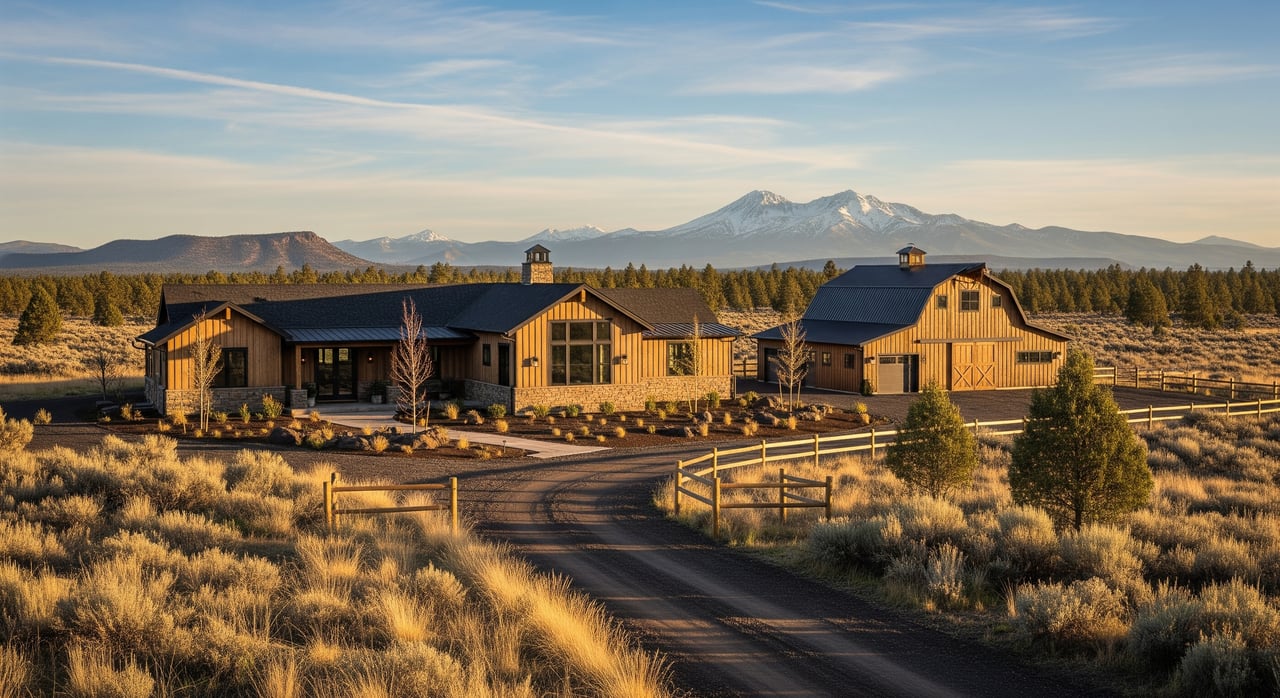
Eyeing a few acres in Terrebonne and picturing a home, a shop, and room to roam? You are not alone. The challenge is turning that vision into a buildable plan that passes Deschutes County reviews. In this guide, you will learn the zoning basics, what to check for setbacks and access, and how to approach utilities and permits so you can move forward with confidence. Let’s dive in.
Terrebonne zoning at a glance
Most Terrebonne acreage sits in unincorporated Deschutes County and follows the County’s zoning code and comprehensive plan. You will usually see Rural Residential, Exclusive Farm Use or Agricultural, and forest or resource zones. Each zone controls what you can build, where you can place it, and whether you can split the land in the future. Always confirm the parcel’s exact zone and any overlay districts with Deschutes County planning or the County GIS before you commit.
What zoning allows
Zoning dictates if you can build a primary home, add an accessory structure, pursue farm uses, or run a small business use. It also sets minimum parcel sizes and density, which affects partition or subdivision options. Read your zone and any overlays first, then plan your site.
Rural Residential (RR)
RR is designed for rural housing on acreage. It typically allows a primary dwelling and accessory structures, with setbacks and height limits by subcategory. RR is a fit for lifestyle buyers who want a home, shop, or small outbuildings, subject to the zone standards.
Exclusive Farm Use / Agricultural (EFU/AF)
EFU and AF protect farm and resource uses. Residential options are more limited and often tied to farm use criteria or conditional approvals. Expect stricter rules on nonfarm dwellings and land division.
Forest and resource zones
These areas prioritize timber and resource management. Homes may be possible but are more constrained and can require a conditional use permit. If you see a forest or resource designation, plan on extra review steps.
Rural commercial or mixed-use areas
Less common near Terrebonne, these allow limited commercial or home-business activity under specific conditions. If you are counting on a business use, confirm it early with the County.
Setbacks and your buildable area
Setbacks define your buildable envelope. They vary by zone and structure type and can be influenced by height, septic reserve areas, and well placement. Topography, wetlands, riparian corridors, and slope rules can also shrink where you can build, so a boundary survey and site walk are smart early steps.
Emergency access and wildfire
Many rural parcels fall in higher wildfire hazard areas. Local building and fire officials may require certain driveway widths, turnarounds, gradients, and on-site water for fire suppression. Defensible space and fire-hardened construction standards are increasingly common, so check with the local fire district during feasibility.
Access, roads, and easements
Legal access is essential for permits and emergency services. If a parcel lacks public road frontage, you will need a recorded access easement or proof you meet private road standards. For shared private roads, the County commonly requires a road maintenance agreement.
If your driveway connects to a state highway such as the US 97 corridor, an Oregon Department of Transportation access permit may be required in addition to County approvals. Order a title report and an up-to-date survey to map all recorded easements, covenants, and rights-of-way. Keep an eye out for items like utility corridors, conservation easements, or mineral rights that could limit site layout.
Utilities and onsite systems
Septic systems
Most acreage relies on an on-site sewage system. Deschutes County Environmental Health typically requires a site evaluation or percolation test and an approved septic design before you can obtain a building permit. Soil type, groundwater depth, slope, and seasonal saturation drive whether you can use a standard system or need an alternative design.
Water supply and wells
Private wells are common. New wells require a permit from the Oregon Water Resources Department. If there is an existing well, request the well log and any pump test data, and confirm the aquifer’s performance. Domestic well rights are different from irrigation rights, so verify any water rights if you plan to irrigate or farm.
Power, propane, and internet
Overhead power lines serve most rural areas, but extending service to a remote homesite can be costly. Contact the local electric utility early for estimates. Natural gas is typically not available on rural acreage; most owners use propane or electric systems. Broadband varies by location, so confirm options like fiber, fixed wireless, or satellite if you plan to work from home.
Stormwater and grading
Some projects require grading and erosion control plans, especially on sloped sites or near waterways. Plan for drainage solutions that protect roads, driveways, and neighboring properties.
Environmental constraints
Wetlands, streams, floodplain, and certain wildlife habitats can limit siting and may require state or federal permits. Review County critical areas and consult the appropriate agencies before you finalize a building pad.
Permits and inspections
A building permit from Deschutes County is required for most new homes, garages, and many accessory buildings. Electrical, plumbing, mechanical, septic, and well permits are usually separate and may involve different divisions or state agencies. Expect plan review for building code compliance, including structural and energy standards, followed by inspections during construction.
Feasibility checklist for buyers
Verify right away
- Confirm the parcel’s zone and any overlay districts with Deschutes County planning.
- Order a current title report and recorded plat to identify easements, CCRs, and deed restrictions.
- Review County GIS layers for floodplain, wetlands, slope, and wildfire hazard overlays.
- Ask Environmental Health about septic history and schedule a site evaluation if needed.
- Contact the Oregon Water Resources Department and local well drillers about groundwater and well logs.
- Check with the County Road Department and ODOT on driveway or access permit needs and who maintains the road.
- Request service availability and cost estimates from the electric utility and internet providers.
- Confirm local fire district requirements for apparatus access, on-site water, and defensible space.
Budget for these line items
- Electrical service extension, well drilling, and septic system installation.
- Road or driveway upgrades to meet private road and fire access standards.
- Alternative septic or geotechnical work if soils or slopes require it.
- Additional time and fees if a conditional use, partition, or public hearing is required.
Watch for red flags
- No legal access or no recorded easement where needed.
- Parcel mostly within mapped wetlands, floodplain, or critical habitat with no practical building area.
- Poor percolation or soils with no viable alternative septic option.
- Very high utility extension costs or no feasible service path.
- Multiple encumbrances, such as conservation easements or mineral rights, that limit surface use.
When to bring in local pros
Early calls save time and money. Key contacts include Deschutes County Community Development for zoning and overlays, Environmental Health for septic requirements, the Oregon Water Resources Department for wells and water rights, and the County Road Department or ODOT for access permits. Your local fire district can clarify driveway design, water-for-fire needs, and defensible space expectations.
Specialists often needed on rural builds include a licensed surveyor, septic designer or soil scientist, well driller or hydrogeologist, civil engineer for driveway and drainage, and an experienced general contractor familiar with County permitting. If your parcel is in EFU or a forest/resource zone, consider a land-use planner or attorney to navigate conditional use paths. A project manager with local experience can sequence septic, well, access, and utility tasks and coordinate submittals so you avoid costly do-overs.
Next steps
- Confirm zoning and overlays, then pull title and survey details.
- Walk the site to mark likely building zones and constraints.
- Order septic and well feasibility checks and get utility cost estimates.
- Align your site plan with setbacks, access, wildfire, and environmental requirements.
- Build a permit timeline and budget before you close or break ground.
If you want a single point of contact to quarterback this process in Central Oregon, reach out to Kenzie Carlstrom for buyer representation and project-managed guidance from first look to final permit.
FAQs
How do I check my Terrebonne parcel’s zoning?
- Contact Deschutes County Community Development or use the County GIS to verify the exact zone and any overlays before you make plans.
Can I build a shop or ADU on Rural Residential acreage?
- Often possible, but size, placement, and use depend on the RR subcategory, setbacks, and any overlays; confirm details with County planning.
What does EFU zoning mean for building a home in Deschutes County?
- EFU prioritizes farm use, so homes usually must meet farm-dwelling criteria and may need land-use approvals; check requirements early in feasibility.
Do I need a road maintenance agreement on a private road near Terrebonne?
- For shared private roads, a recorded maintenance agreement is commonly required, especially with partitions or subdivisions.
When is an ODOT driveway permit required along US 97?
- If your parcel accesses a state highway, an ODOT access permit may be needed in addition to County approvals; verify during feasibility.
How close to property lines can I build on acreage in Terrebonne?
- Setbacks vary by zone and structure type, and septic reserve areas can affect placement; review your zone standards to map a buildable envelope.
How long do septic and well approvals take in Deschutes County?
- Timelines vary by season and workload; plan for a site evaluation, design review, and agency permits before submitting your building plans.