Dreaming about a sweeping Gorge view or a few usable acres near Hood River? You are not alone, but these properties often come with more moving parts than a typical in-town home. If you want the scenery and a smooth purchase, it helps to know what to check before you fall in love with the view. Let’s dive in.
Why Hood River acreage needs extra diligence
Around Hood River, view homes and acreage can sit outside city limits, inside the Columbia River Gorge National Scenic Area, or both. That matters because Hood River County Community Development handles land use outside the city limits of Hood River and Cascade Locks and also manages lands within the Scenic Area.
In plain terms, a beautiful property can be more complex than it first appears. A strong view does not always mean simple permitting, easy access, or straightforward utility setup.
Scenic Area rules can affect what you build
If a property is in the National Scenic Area, development is expected to blend into the natural surroundings. The Gorge Commission notes that public roads, trails, parks, and other vantage points can count as key viewing areas, and even sites that feel tucked away may still be subject to scenic standards.
That means a ridge-top or open-slope property may come with more design review than a site with natural screening. Existing topography, vegetation, and visibility can all influence where a home is placed and how it is designed.
View value and regulatory ease are not the same
This is one of the biggest mindset shifts for buyers. The lot with the widest panorama may not be the easiest lot to improve, expand, or rebuild.
A naturally screened site may offer a better balance of privacy, usability, and approval path. When you compare properties, it helps to weigh the view premium against the likely land-use complexity.
Zoning shapes what a parcel can do
Not all acreage around Hood River is the same. County zoning materials show that Rural Residential land is intended to maintain a semi-rural atmosphere and allows one single-family dwelling per lot or parcel, while forest and Exclusive Farm Use parcels follow different standards.
Forest zones can have large minimum lot sizes, and EFU land has separate farm-use and dwelling rules. Before you assume a parcel is buildable or fits your plans, confirm the exact zoning and what that zoning allows.
Ask zoning questions early
Before you get too far into a purchase, it is smart to confirm:
- The parcel’s zoning designation
- Whether a dwelling is allowed on the parcel
- Whether the property is in the Scenic Area
- Whether there are additional design or development standards
- Whether your intended use matches the parcel rules
This early step can save you time, money, and frustration later.
Access matters more than many buyers expect
A public road does not always mean county maintenance. Hood River County defines local access roads as public roads outside city limits that are not maintained by the county, which is especially important if you are buying acreage.
If winter access matters to you, this is a key issue. You will want to know not only how you reach the property, but who maintains that road and what happens during snow or storm conditions.
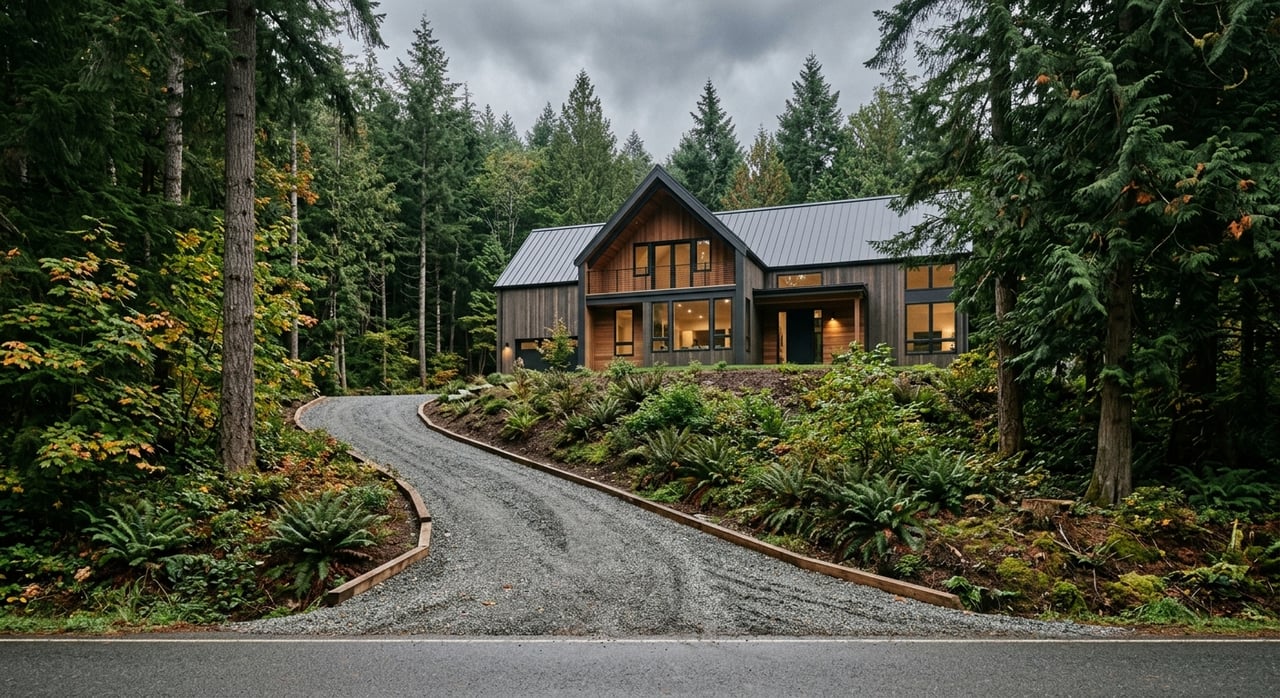
Driveways and road approaches need review
The county requires permits for driveways, road approaches, utility work in county right-of-way, and some other roadway-related work. Review times can take at least 10 business days for smaller projects and up to 60 days for larger ones.
In some cases, the county may also require insurance or a performance bond. If you are planning improvements, that timeline should be part of your decision-making.
Confirm legal access before closing
For acreage, legal access should never be assumed. County access-management rules and survey guidance make it worth confirming exactly how the property is reached and documented.
A solid due-diligence review should include:
- Whether access is legal and recorded
- Whether there are easements
- Whether there is a shared-drive agreement
- Who owns the road or driveway area
- Who handles maintenance and snow removal
Water and sewer are highly parcel-specific
Inside the city, Hood River’s water comes from springs southwest of town near Mount Hood, and the city sewer system serves the Hood River Urban Growth Area. Outside city service, you should verify water and wastewater solutions for that specific property.
This is where acreage shopping becomes very property-by-property. Two nearby parcels can have very different utility realities.
Septic requires records and permits
Hood River County Environmental Health handles site evaluations, permits, and inspections for many onsite wastewater systems. A permit is required before constructing, altering, or repairing a septic system.
Just as important, the Oregon Department of Environmental Quality says a site evaluation does not guarantee approval of a particular septic system. Even if a site looks promising, you still need the right permits and approvals.
Wells and water rights need a closer look
In Oregon, water belongs to the public, and most water use requires a permit or license. Well reports from the Oregon Water Resources Department can show useful details like depth, casing, flow rate, and water level.
If a property includes a certificated water right, state guidance says that right stays attached to the land when the property is sold. For buyers considering acreage for home use, landscaping, or other land-based plans, that distinction can be very important.
Oregon well testing is a practical must-know
If a real estate transaction includes a domestic well, Oregon requires the seller to test for arsenic, nitrates, and total coliform bacteria. The seller must provide the results to the buyer within 90 days of receiving them.
That does not replace your broader due diligence, but it is a very practical part of buying rural or semi-rural property in this market.
Topography can change the whole equation
The same slope that creates an incredible outlook can also increase costs and complexity. Around Hood River, steep lots may affect grading, drainage, wildfire exposure, and driveway design.
That is why the best property is often not the one with the absolute biggest panorama. It is the one that balances view, access, and buildability in a way that supports how you actually want to live.
Hazard review should be part of your search
Hood River County’s Natural Hazard Mitigation Plan lists 11 hazards, including wildfire, winter storm, drought, extreme heat, air quality and smoke, landslide and debris flow, flood, windstorm, earthquake, volcanic event, and Cascadia Subduction Zone event.
You do not need to treat every property as a problem, but you do want clear information. A hazard review can help you understand the setting, the tradeoffs, and the long-term fit.
Wildfire and defensible space matter
County wildfire guidance says fire danger can rise quickly in hot, dry weather, and local fire season generally runs from mid-June to mid-October. The county also points to defensible space as a core home-protection strategy.
For homes in the Scenic Area, defensible-space guidance is also part of the larger conversation. If you are buying a view home in a more natural setting, ask how the site supports ongoing property maintenance and fire readiness.
Floodplain and geohazard checks are worth it
Hood River County directs property owners and buyers to resources like its WebMap, DOGAMI’s geohazards viewer, lidar, and the USDA Web Soil Survey. The county also says a floodplain development permit is required before construction in mapped flood hazard areas.
For buyers, this means floodplain location, slope conditions, and soils should be reviewed early. These factors can influence both current enjoyment and future project options.
A practical Hood River buying checklist
When you are comparing view homes and acreage around Hood River, keep your due diligence focused on the basics that most affect use and resale.
Here is a strong starting checklist:
- Verify zoning and allowed uses
- Confirm whether the parcel is in the Scenic Area
- Check legal access, easements, and road ownership
- Confirm winter maintenance responsibility
- Review road-approach or driveway requirements
- Pull well logs and check water rights
- Obtain septic records or order a site evaluation
- Review floodplain, geohazard, and soil resources
- Consider a boundary survey before closing
What tends to support resale
The strongest resale candidates are often the properties that combine a great setting with fewer unresolved questions. In practical terms, that usually means legal access, clear maintenance responsibility, documented utility capacity, zoning that fits the intended use, and site conditions that do not rely on a fragile workaround.
That does not mean every property needs to be perfect. It means the best purchases usually pair lifestyle appeal with a clean, well-understood path forward.
How to buy smarter in Hood River
If you are shopping for acreage or a view property, it helps to slow down before you speed up. A beautiful first impression matters, but your best decision usually comes from understanding the parcel, not just the panorama.
With the right local strategy, you can narrow in on properties that fit your goals and avoid surprises that show up too late. If you want help evaluating view homes, acreage, or off-market opportunities in the Gorge, connect with Kenzie Carlstrom.
FAQs
What should you verify before buying acreage near Hood River?
- Start with zoning, legal access, road maintenance, water source, septic status, floodplain location, geohazard conditions, and boundary information.
What does Scenic Area status mean for a Hood River view property?
- It can mean added review focused on how development blends into the landscape, including visibility from key public viewing areas, topography, vegetation, and design choices.
Do public roads near Hood River always get county maintenance?
- No. Hood River County says some public roads outside city limits are local access roads that are not maintained by the county.
What utility questions matter for Hood River acreage?
- You should confirm whether city water or sewer is available, review well information and any water rights, and obtain septic records or a site evaluation for properties on onsite systems.
Does a septic site evaluation guarantee approval in Hood River County?
- No. State guidance says a site evaluation does not guarantee approval of a specific septic system, and separate permits are still required.
What well testing is required in an Oregon home sale?
- For a transaction that includes a domestic well, Oregon requires testing for arsenic, nitrates, and total coliform bacteria, with results provided by the seller to the buyer within 90 days of receiving them.
Why can steep Hood River view lots be more complex?
- Steep topography can affect grading, drainage, wildfire exposure, driveway design, and overall buildability, even when the views are exceptional.