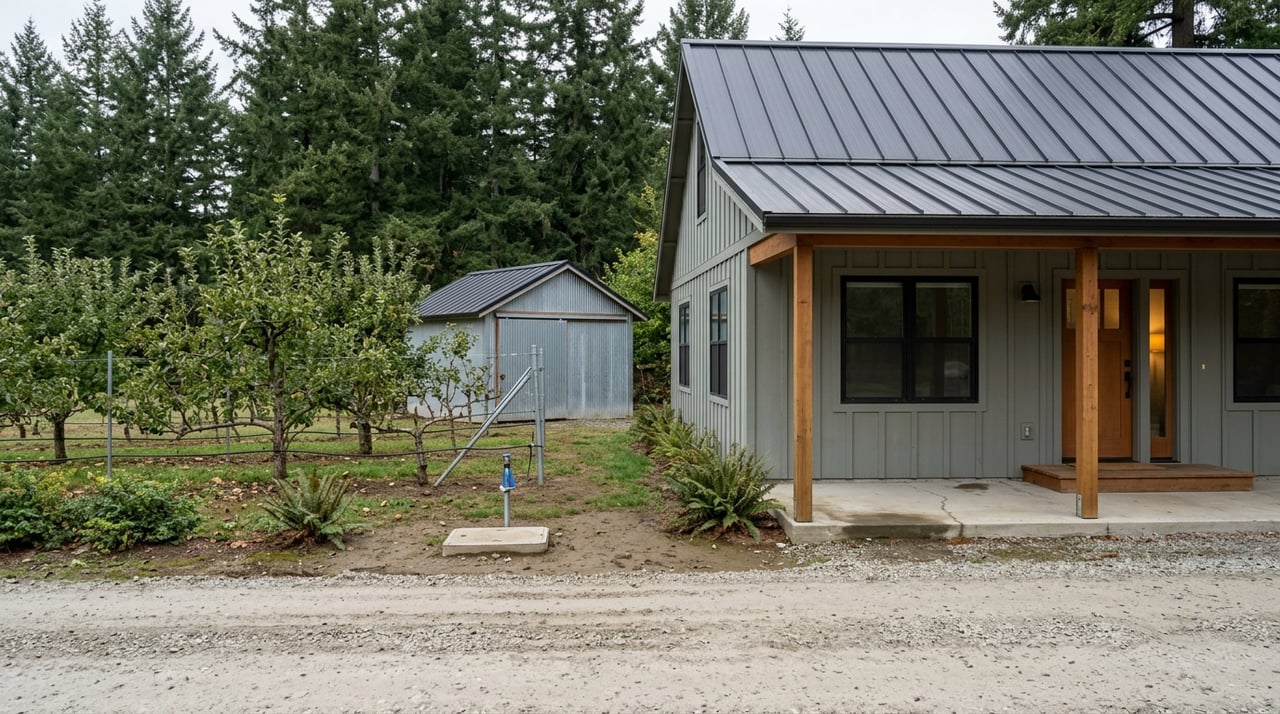
Dreaming about a small farm or orchard property near Mt. Hood? In Parkdale and the upper Hood River Valley, you are not just buying acreage with a view. You are often buying into a working agricultural landscape where soils, slope, irrigation, zoning, and existing infrastructure can shape what the property can actually do for you. If you want a clearer way to evaluate these properties before you write an offer, this guide will help you focus on what matters most. Let’s dive in.
Why Parkdale draws small-farm buyers
Parkdale sits in the upper Hood River Valley, about 15 miles south of the Columbia River. Hood River County describes it as a community known for fruit orchards, an agriculture-based economy, the Hood River Fruit Loop, and its proximity to Mt. Hood.
That combination gives you something many rural markets do not. You get scenic acreage and a long-established tree-fruit setting at the same time. For many buyers, that makes Parkdale feel less like generic country land and more like a place where a small farm or orchard can be part of a real long-term plan.
OSU Extension reinforces that identity. Pears are now the valley’s major commercial crop, while apples were historically dominant, and sweet cherries and vineyards have also expanded. That matters because it tells you this is an active production area with a deep agricultural base, not just a lifestyle market with a few hobby parcels.
Orchard value is more than acreage
When you look at small farms and orchard properties near Mt. Hood and Parkdale, the house is only part of the story. The land may be valued for whether it can support orchard plantings, irrigation, and farm use over time.
That means two properties with similar acreage can have very different value. A parcel with usable irrigation service, productive soils, and orchard equipment may offer a very different opportunity than vacant land without those features.
OSU orchard economics help explain why. In one 2021 bulletin, irrigated land with no fruit trees was modeled at $15,000 per acre for analysis purposes, while a 2012 medium-density pear model assumed commercial yields begin in year 4 and full production is reached in year 10. In simple terms, improved orchard ground may reflect years of planning, planting, and investment.
Check soils and microclimate first
If you are evaluating orchard property, soils and climate should be near the top of your list. USDA soil series descriptions show that Parkdale soils are very deep and well drained, formed in mud flows with high pyroclastic materials, and are used mainly for orchard crops.
These soils are mapped on uplands with slopes from 0% to 40%. They have a mean annual precipitation of about 42 inches, a mean annual temperature of about 47°F, and a frost-free period of 100 to 120 days.
Oak Grove soils are also common in the area and are used for orchard crops, hay, and pasture. They are very deep and well drained as well, with about 40 inches of precipitation, a mean annual temperature of about 49°F, and a frost-free season of 120 to 180 days.
For you as a buyer, the key point is that not every parcel performs the same way. Elevation, exposure, and position on the slope can change growing conditions in a meaningful way, even within the same broader area.
Slope affects frost risk
OSU Extension gives a practical rule that is easy to remember. Cold air drains to the bottom of slopes, which can create frost pockets.
That means the prettiest flat area on a parcel may not always be the best orchard site. A property with better cold-air drainage may offer an advantage, especially if you are thinking about tree fruit production.
Drainage matters for irrigation potential
Hood River County’s agricultural lands report says good irrigation potential is generally associated with good soil drainage. It specifically names Parkdale and Oak Grove soils as examples.
OSU Extension also notes that gravelly soils need more water. So even if a parcel has irrigation access, the amount of water needed and how efficiently the land uses it can still vary by soil type.
Irrigation is a separate question from domestic water
This is one of the biggest points buyers should understand. A property can have domestic water service and still require deeper investigation on the agricultural side.
Parkdale’s community plan says the community is served by Parkdale Water Company and Parkdale Sanitary District. That helps you understand domestic service in the area, but it does not answer whether a parcel has usable irrigation water, delivery infrastructure, or frost-protection capacity for orchard use.
Hood River County identifies five irrigation districts in the basin:
- Dee
- East Fork
- Farmers
- Middle Fork
- Mt. Hood
Because irrigation service is district-specific rather than countywide, you should confirm exactly which district, if any, serves the parcel you are considering.
Know the irrigation season
Middle Fork Irrigation District says the Hood River Valley irrigation season runs from April 15 to September 30. It provides 5.6 gallons per minute per acre plus 3 acre-feet over the season.
Farmers Irrigation District also says delivery starts April 15 and ends September 30. Those dates are useful, but the bigger takeaway is that parcel-specific service and infrastructure still need to be verified before you move forward.
Zoning can shape your future plans
A beautiful parcel can still be the wrong fit if the zoning does not support your intended use. Hood River County’s zoning ordinance includes Exclusive Farm Use, Parkdale Residential, Parkdale Commercial, Parkdale light industrial, and land use permit provisions.
For many small-farm and orchard buyers, EFU is especially important. The county says the purpose of EFU zoning is to preserve agricultural land and protect it from inappropriate development.
The Parkdale Community Plan adds an important note. EFU lands south and east of the Parkdale community boundary do not typically have housing unless the housing is used in conjunction with farming.
Ask these zoning questions early
Before you write an offer, try to get clear answers to a few practical questions:
- What is the exact zoning district?
- Is the existing dwelling lawful?
- Would a second dwelling require review or approval?
- Would farmworker housing require review or approval?
- Would a barn conversion or other nonstandard use be allowed?
- Are there land use permits or conditional use issues to review?
County planning materials are the right place to confirm those details before a transaction becomes hard to unwind.
Public listing examples show a wide range
Current public listings in Mount Hood Parkdale show how much pricing can vary. During research, examples included 1.07 acres at $219,500, 6.87 acres at $478,000 with orchard micro-sprinklering, 5.06 acres at $520,000, and a 16.97-acre productive pear orchard at $1.1 million.
These are asking prices, not closed sales, so they should be treated carefully. Still, they show how quickly value can change based on orchard condition, irrigation, and improvements.
A LandWatch listing for the 16.97-acre orchard noted orchard fans and irrigation equipment as part of the sale. That is a strong reminder that agricultural infrastructure can carry real value alongside the land itself.
Broader county inventory showed the same pattern, including a 49-acre listing at $1.875 million and a 214.76-acre orchard and timber property at $3.5 million. In other words, there is no simple per-acre shortcut that works across this market.
What to inspect before making an offer
When you tour small farms and orchard properties near Mt. Hood and Parkdale, it helps to look beyond the usual residential checklist. You want to understand both the home and the land as a functioning property.
Here are some of the most important items to review:
- The mapped soil series on the parcel
- Slope, elevation, and likely frost exposure
- Irrigation district service and membership
- Water delivery infrastructure on site
- Existing orchard blocks and their condition
- Included equipment such as fans or micro-sprinkler systems
- The exact zoning district
- The legal status of any existing dwelling or accessory structure
- Parcel boundaries and lot configuration
If you are comparing multiple properties, keeping this list consistent can help you make a much cleaner decision.
Public tools that can help you verify details
Hood River County Community Development offers useful tools for zoning, GIS mapping, property search, and planning or building contacts. In practice, that can be one of the fastest ways to verify parcel boundaries, zoning, and whether a property is in EFU, a community zone, or another district.
USDA NRCS Web Soil Survey is also useful for reviewing mapped soils, and USDA notes that it is the current authoritative source for soil survey information. For more production-focused questions, OSU Extension Hood River County and the Mid-Columbia Agricultural Research and Extension Center provide local tree-fruit guidance.
For irrigation questions, district offices like MFID and FID are important resources for season dates, allocations, and parcel-specific service questions. That local verification can be especially valuable when you are trying to separate a promising listing from a truly workable property.
Why local guidance matters in this market
Buying a small farm or orchard property in the Parkdale area often involves more moving parts than a typical residential purchase. You may be weighing views, lifestyle, and future land use at the same time.
That is where organized, local guidance can make a real difference. A well-managed search can help you narrow options faster, ask the right questions sooner, and avoid spending time on parcels that do not fit your goals.
If you are exploring orchard land, scenic acreage, or a lifestyle property near Mt. Hood, working with someone who can help coordinate the details matters. When you are ready to talk through your options in the Gorge, connect with Kenzie Carlstrom for thoughtful, hands-on guidance.
FAQs
What makes Parkdale appealing for small-farm buyers?
- Parkdale offers a mix of scenic acreage, an established orchard economy, proximity to Mt. Hood, and a long history of fruit production in the upper Hood River Valley.
What crops are common near Parkdale and Mt. Hood?
- OSU Extension says pears are the valley’s major commercial crop, with sweet cherries and vineyards also expanding, while apples were historically dominant.
What should you check first on orchard property in Hood River County?
- Start with soils, slope, frost exposure, irrigation service, zoning, and whether the dwelling and other structures are lawful for the parcel.
What is the irrigation season in the Hood River Valley?
- MFID and FID state that irrigation delivery generally runs from April 15 through September 30, though parcel-specific service still needs to be confirmed.
Does domestic water service mean a parcel has irrigation water?
- No. Domestic service and agricultural irrigation are separate issues, so you should verify irrigation district service, delivery infrastructure, and water details independently.
Why do orchard properties near Parkdale vary so much in price?
- Asking prices can change significantly based on acreage, orchard condition, irrigation access, and included infrastructure like fans, micro-sprinklers, and other farm improvements.
How can you verify zoning for a Parkdale-area property?
- Hood River County Community Development tools, including GIS mapping and property search resources, can help you verify zoning, parcel boundaries, and whether a property is in EFU or another district.